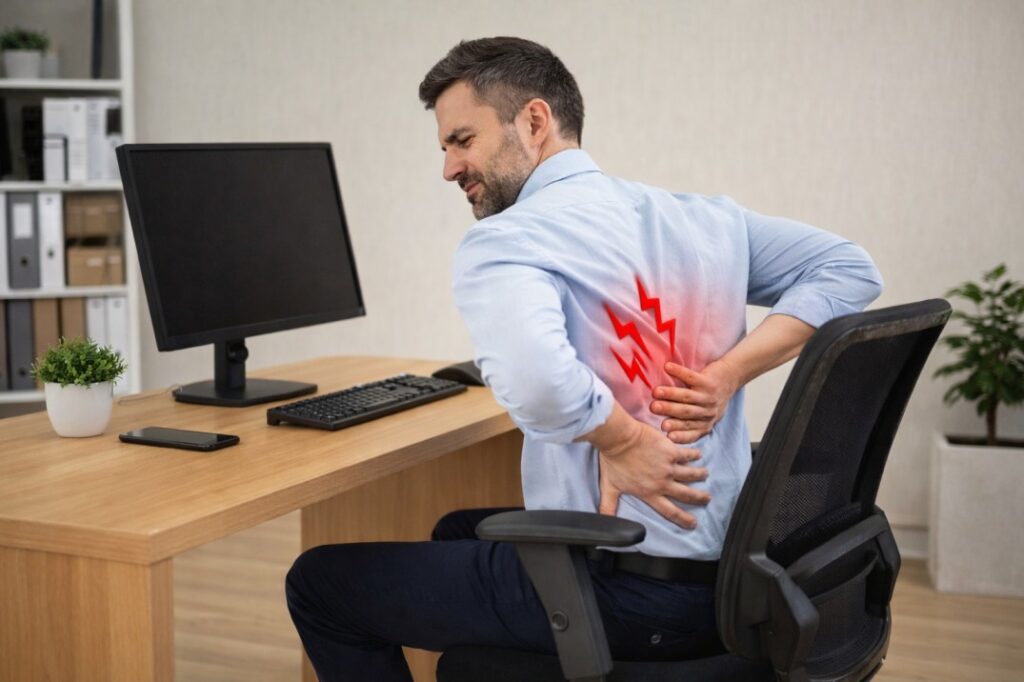
If your mid-back feels stiff, tight, or heavy after a long day at your desk, you’re not alone. Many office workers describe the same dull ache between the shoulder blades, a feeling of pressure when sitting upright, or a need to constantly stretch and “crack” their back.
This discomfort is often called the “desk worker’s tax.” It develops gradually from hours of sitting, screen use, and minimal movement. While it is usually not serious, it can become persistent and frustrating if the underlying causes aren’t addressed properly.
Understanding why mid-back stiffness happens — and how to fix it long term — can help you avoid recurring pain and improve how you feel at work and beyond.
Can Sitting at a Desk Cause Mid-Back Pain?
Yes, prolonged desk work can absolutely cause mid-back stiffness and discomfort.
The thoracic spine, which forms the middle portion of your back, is designed for both stability and movement. When you sit for extended periods, your spine naturally rounds, your shoulders drift forward, and your head moves ahead of your body. This posture overstretches the rhomboid muscles between the shoulder blades and forces the trapezius muscles to work overtime just to hold you upright.
Over time, this leads to muscle fatigue, joint stiffness, and a sensation of tightness that often worsens toward the end of the day.
It’s important to understand that the issue is rarely “damage.” In most desk workers, the problem is mechanical and postural rather than structural.
Why Does My Mid-Back Feel So Tight?
Mid-back tightness from desk work is usually caused by a combination of factors rather than one single issue.
Prolonged Static Posture
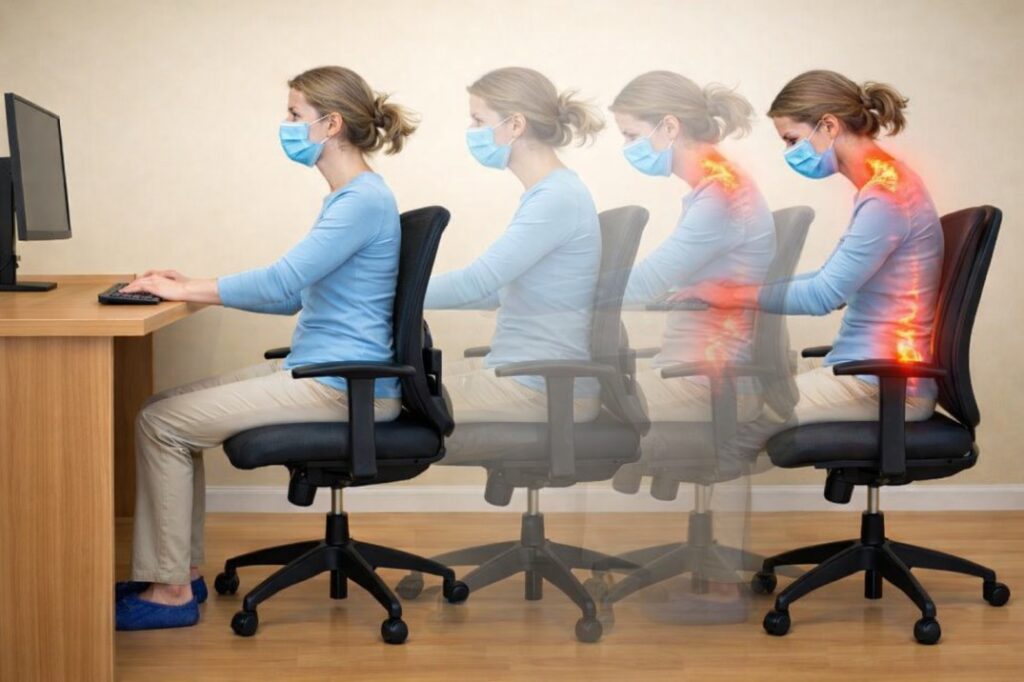
Even perfect posture becomes uncomfortable if you hold it for too long. The spine thrives on movement and variation. When you sit for hours without changing position, the joints of the thoracic spine experience static loading — meaning they remain under constant low-level pressure.
This reduces circulation to muscles and increases stiffness in the spinal joints. The result is that heavy, restricted feeling many people describe by late afternoon.
Forward Head Posture and Rounded Shoulders
When your monitor is too low or too far away, your head drifts forward. Because the head is relatively heavy, this creates extra strain on the upper and mid-back. Rounded shoulders further increase the load on the thoracic spine.
The muscles between the shoulder blades become overstretched yet simultaneously overworked. This creates fatigue that feels like tightness, even though the muscles may actually be lengthened rather than shortened.
Muscle Endurance, Not Just Weakness
Many people assume they are simply “weak.” In reality, the problem is often poor postural endurance rather than lack of strength. You may be strong in the gym, but holding a neutral spine for eight hours requires sustained low-level activation.
When those muscles fatigue, your posture collapses. As posture collapses, stiffness increases.
Dehydration and Disc Compression
Spinal discs are largely composed of water. Prolonged sitting compresses them slightly throughout the day. If hydration is low and movement is minimal, the discs may not regain optimal fluid balance, contributing to a sensation of stiffness.
While this is subtle, it plays a role in why mid-back discomfort often improves after movement or gentle stretching.
Stress and Tension
Mental stress frequently manifests physically. Many people unconsciously elevate their shoulders during deadlines or concentrate intensely on screens without relaxing their upper body.
This sustained tension builds in the trapezius and surrounding muscles, leading to tightness that feels difficult to release.
Quick Desk-Side Fixes That Actually Work
You don’t need a gym to reduce mid-back stiffness. Small movement “resets” throughout the day can significantly improve how your spine feels.
Shoulder blade squeezes help reactivate dormant postural muscles. Sitting tall, gently pull your shoulder blades together and hold briefly before releasing. This counteracts rounding and restores muscle engagement.
A seated spinal twist can restore rotation in the thoracic spine. With feet flat on the floor, gently rotate your torso to one side while keeping your hips stable. This movement reintroduces mobility lost during prolonged sitting.
Seated cat-cow movements encourage gentle spinal flexion and extension. Alternating between rounding and arching your back helps lubricate joints and reduce stiffness.
Standing up every 30 minutes, even briefly, may be the most powerful intervention of all. The spine responds well to variety. Frequent micro-breaks reduce cumulative strain far more effectively than one long stretch at the end of the day.
Adjusting Your Workstation
If mid-back tightness returns daily, your desk setup may be contributing.
The top third of your monitor should sit roughly at eye level. If it is too low, you are guaranteed to hunch forward. Your keyboard and mouse should be close enough that your elbows remain by your sides at approximately ninety degrees. Overreaching places immediate strain on the upper back.
Lumbar support is also critical. When the lower back collapses, the thoracic spine compensates by rounding further. Supporting the natural curve of your lower back allows the mid-back to maintain a more neutral position.
Ergonomics alone will not solve everything, but they significantly reduce unnecessary strain.
Why the Stiffness Keeps Coming Back
Many desk workers experience temporary relief from stretching, only for stiffness to return the next day. This cycle happens for several reasons.
First, stretching without strengthening does not build endurance. If the supporting muscles remain easily fatigued, posture will continue to collapse under prolonged sitting.
Second, the volume of sitting often outweighs the volume of corrective exercise. Even an hour at the gym cannot fully offset eight to ten hours of static posture without movement breaks.
Third, stress levels remain high. Chronic tension keeps muscles guarded, limiting their ability to relax fully.
Finally, movement variety is lacking. The spine is designed to bend, rotate, and extend regularly. When it remains mostly flexed throughout the day, stiffness accumulates.
Long-term improvement requires a combination of mobility work, endurance strengthening, ergonomic awareness, and consistent movement breaks.
How to Fix Mid-Back Pain From Sitting Long Term
The key to lasting relief is not aggressive stretching but restoring balance to the thoracic spine.
Improving thoracic mobility through controlled extension and rotation exercises helps reduce joint stiffness. Strengthening the muscles between the shoulder blades builds postural endurance so your spine can maintain alignment with less effort.
Movement breaks every 30 to 60 minutes prevent static loading from accumulating. Even standing to take a phone call or walking briefly around the office can reset muscle activation.
Hydration and stress management also play subtle but meaningful roles. Relaxed breathing patterns reduce shoulder elevation and muscle guarding.
When these elements are combined consistently, mid-back tightness often reduces significantly within weeks.
When Should You Be Concerned?
Most mid-back stiffness from desk work is mechanical and not dangerous. However, certain symptoms require medical evaluation.
Pain following trauma, such as a fall or accident, should always be assessed. Persistent numbness or tingling in the arms may suggest nerve involvement. Severe, unrelenting pain that does not change with position should also be reviewed.
In rare cases, mid-back pain accompanied by fever, unexplained weight loss, or other systemic symptoms requires prompt medical attention.
If your discomfort is simply worse after sitting and improves with movement, it is very likely postural and muscular in nature.
How Chiropractic Care Can Help Desk Workers
When mid-back stiffness becomes persistent or repeatedly interferes with work and sleep, professional assessment can provide clarity.
At Flynn Chiro, desk-related spinal issues are evaluated through a detailed history and physical examination. The goal is to determine whether stiffness is primarily muscular, joint-related, posture-driven, or influenced by other factors.
Rather than simply providing short-term relief, the focus is on restoring normal spinal mechanics and building resilience so that stiffness does not return as quickly.
Professional Support for Persistent Mid-Back Stiffness
If mid-back stiffness continues to return despite improving your posture and taking regular movement breaks, a personalised assessment can make a significant difference. At Flynn Chiro, we provide tailored chiropractic care focused on desk-related spinal tension, thoracic joint restriction, and postural fatigue. Through hands-on treatment, mobility work, and targeted strengthening advice, our approach helps restore movement and build postural endurance rather than just offering temporary relief. If you’re experiencing ongoing discomfort between the shoulder blades, explore chiropractic care for back pain and posture-related issues to support long-term spinal health and workplace comfort.
Final Thoughts
Mid-back stiffness from desk work is extremely common, but it is not something you simply have to tolerate. The thoracic spine responds well to consistent movement, endurance training, and improved ergonomics.
Small changes repeated daily often make a larger difference than occasional intense stretching sessions. By addressing posture, muscle endurance, and movement variety together, most desk-related tightness can be significantly reduced.
If discomfort continues despite self-care, a thorough assessment can identify the specific mechanical factors contributing to your symptoms and help you return to comfortable, productive workdays.
Frequently Asked Questions
Can sitting at a desk cause mid-back pain?
Yes. Prolonged sitting encourages rounded posture, forward head position, and muscle fatigue in the thoracic spine. Over time, this leads to stiffness and tightness between the shoulder blades.
How do I fix middle back pain from sitting?
Improving ergonomics, taking frequent movement breaks, strengthening postural muscles, and restoring thoracic mobility are key steps. Stretching alone is rarely sufficient.
How can I relieve back pain from a desk job quickly?
Gentle spinal mobility exercises, shoulder blade activation, and short standing breaks can reduce stiffness within minutes by restoring circulation and movement.
Why do I feel tightness in my mid back?
Tightness usually results from muscle fatigue, prolonged static posture, stress-related tension, or reduced joint mobility in the thoracic spine.
Is mid-back stiffness serious?
In most desk workers, it is not serious and is related to posture and prolonged sitting. Persistent, worsening, or unusual symptoms should still be assessed to rule out other causes.