Elbow pain from lifting weights is one of the most common gym-related problems. It often starts as a mild ache during training, then gradually becomes more noticeable when gripping a bar, lifting a dumbbell, or even picking up a coffee cup.
For many lifters, the pain shows up during deadlifts, curls, bench press, rows, or pull-ups. In most cases, it is a sign that the tendons around the elbow are being loaded faster than they can adapt. Repetitive strain injuries are among the most common causes of elbow pain, and both tennis elbow and golfer’s elbow are linked to repeated stress through the forearm tendons.
The good news is that elbow pain from lifting weights does not always mean you need to stop training completely. With the right changes to load, technique, and recovery, many lifters can settle symptoms and return to training more comfortably. Activity modification, bracing, stretching, and progressive loading are commonly used approaches, while complete rest is not always the best long-term answer.
Why Elbow Pain From Lifting Weights Happens
Your elbow sits between the shoulder and the wrist, so it absorbs force every time you grip, pull, press, or carry weight. The forearm muscles create force through tendons that attach around the elbow. When those tendons are exposed to too much load, too often, irritation can develop. Repetitive strain injuries and repeated stress on the elbow tendons are common explanations for this type of pain.
In the gym, this often happens when training volume increases too quickly, grip demand is high, technique changes under fatigue, or recovery is not keeping up with workload. Tendons generally adapt more slowly than muscles, which is one reason people can feel strong enough to lift heavier before the elbow is truly ready for the extra load. This gradual overload pattern is also reflected in how tennis elbow and golfer’s elbow typically develop.
Inner Elbow Pain From Lifting Weights
Inner elbow pain from lifting weights usually affects the bony area on the inside of the elbow. This pattern is commonly similar to golfer’s elbow, also called medial epicondylitis. It involves the tendons that help bend the wrist and grip with the fingers. Repetitive, forceful gripping and wrist use are well-recognised triggers for medial elbow pain.
This type of pain is often aggravated by deadlifts, pull-ups, rows, preacher curls, and other exercises where you grip hard and pull repeatedly. People often notice that it is not just the gym lifts that hurt. Shaking hands, lifting a bag, turning a door handle, or picking up a mug can also become uncomfortable because gripping continues to load the irritated tendon. Repeated grasping and twisting are common aggravators for medial elbow pain.
Outer Elbow Pain From Lifting Weights
Outer elbow pain from lifting weights usually sits on the outside of the elbow and is commonly similar to tennis elbow, also called lateral epicondylitis. This condition is linked to repeated stress on the tendons that extend the wrist and fingers, and common symptoms include pain or weakness when grasping.
In the gym, it may flare during curls, heavy carries, pressing variations, skull crushers, and lifts where the wrist extends under load. Many people describe a sharp or burning pain on the outside of the elbow, often with weaker grip strength first thing in the morning or after a hard training block. Pain with gripping and lifting is a common symptom pattern in lateral elbow pain.
Elbow Pain When Gripping Weights
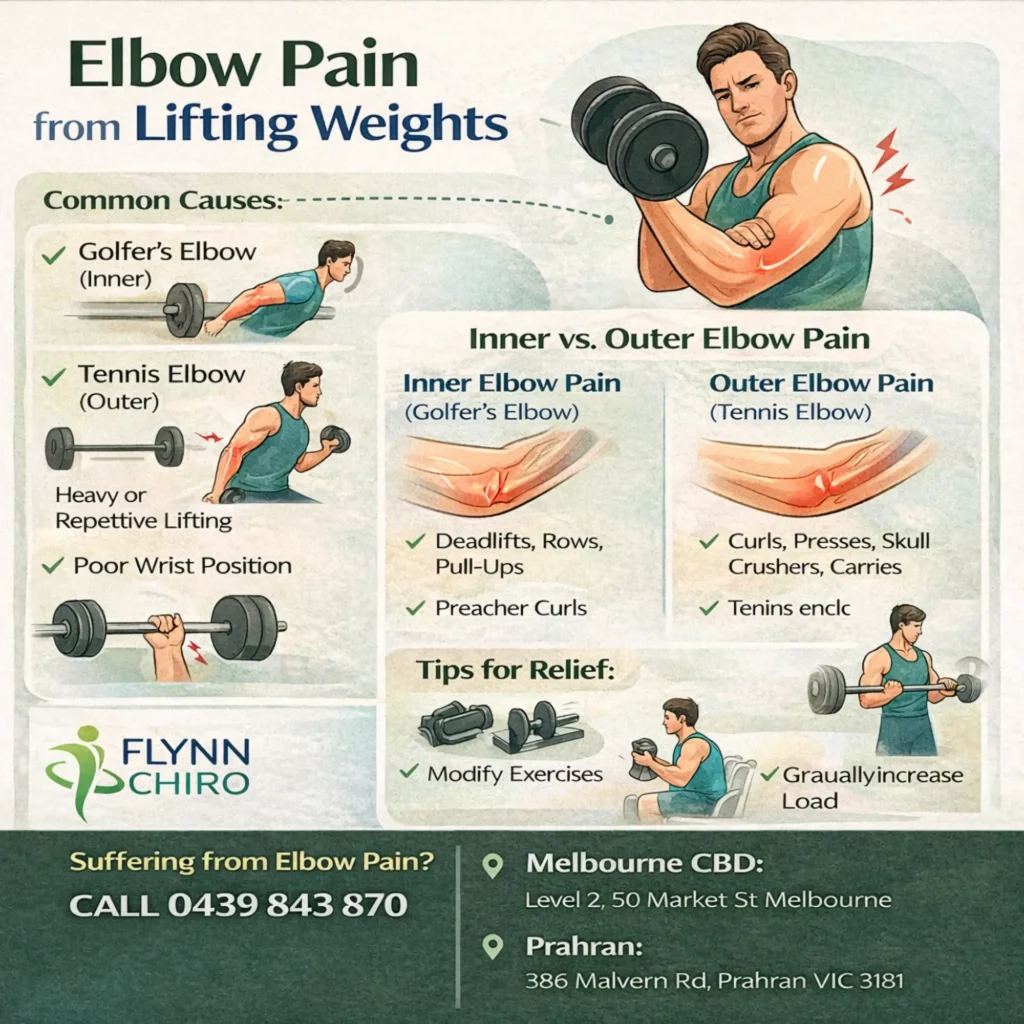
One of the most useful clues is whether you feel elbow pain when gripping. If gripping a barbell, dumbbell, cable handle, or even a coffee cup makes the pain worse, the forearm tendons are often involved. Grasping and twisting activities are classic aggravating factors for both tennis elbow and golfer’s elbow.
This is why elbow pain from lifting weights is often not just about the elbow itself. Wrist position, shoulder control, and grip mechanics all influence how much force the tendon has to manage. If your wrist bends too far back during pressing or too far forwards during curls, extra strain can travel straight into the elbow. Repeated stress rather than one dramatic injury is the more typical cause.
Common Causes Of Elbow Pain In The Gym
Too Much Load, Too Soon
A fast jump in weight, volume, frequency, or intensity is one of the most common reasons elbow pain starts. Your muscles may feel ready, but the tendon may still be catching up.
Poor Wrist Position
If your wrist collapses under load, your elbow often takes the strain. This is especially common during curls, pressing, and heavy pulling.
Too Much Gripping
Deadlifts, rows, chin-ups, carries, and cable work can all create a lot of tendon load through repeated gripping.
Not Enough Recovery
Training hard with poor sleep, high work stress, and limited rest days can make tendon overload more likely.
Desk Work Plus Gym Training
For many Melbourne CBD workers, long hours at a desk followed by intense evening training can create the perfect combination of postural tension, shoulder stiffness, and forearm overload.
These patterns fit with the broader way repetitive strain elbow problems usually develop: repeated use, poor load tolerance, and aggravating wrist or gripping tasks.
How To Tell If It Is Inner Or Outer Elbow Pain
A simple way to tell the difference is by location.
If the pain is on the inside of the elbow, it is more likely to behave like golfer’s elbow. If it is on the outside of the elbow, it is more likely to behave like tennis elbow. That inside-versus-outside distinction is one of the clearest clinical differences between medial and lateral epicondylitis.
Inner elbow pain often feels worse with gripping, pulling, and wrist flexion. Outer elbow pain more often flares with gripping, lifting, and wrist extension. Both can create a weaker grip and morning stiffness.
Why Elbow Pain Keeps Coming Back
Recurring elbow pain is usually a sign that the tendon irritation settled temporarily, but the root cause did not change. That often means the same grip mechanics, loading errors, training volume, or shoulder restrictions are still present.
This is why pain may improve with a few days off, then return as soon as training ramps back up again. Conditions like tennis elbow can last a long time if aggravating activity continues, and both tennis elbow and golfer’s elbow are usually related to repeated tendon stress rather than a one-off event.
What To Do Right Away
If elbow pain from lifting weights has just started, the first step is usually to modify, not abandon training.
Reduce the exercises that sharply aggravate the elbow. Lower the load for a short period. Consider swapping from a straight bar to dumbbells or a more neutral grip. Some people also find that straps help during heavy pulling because they reduce how hard the forearm has to grip. Activity modification, ice, stretching, and braces are all commonly recommended options for tendon-related elbow pain.
The goal is to reduce irritation without completely shutting everything down. Total rest can sometimes make the return to lifting harder because the tendon loses load tolerance. Gradual, sensible loading is usually more useful than doing nothing at all.
The Best Rehab Approach For Elbow Pain From Lifting Weights
Long-term improvement usually comes from progressive tendon loading.
This often includes controlled forearm strengthening, isometric work, gradual grip exposure, and improving shoulder and upper back control. Stretching can help, but stretching on its own is rarely enough. Treatment guidance for tennis elbow and golfer’s elbow commonly includes stretching, braces, activity modification, and progressive exercise, with surgery used far less often.
It is also worth addressing what is happening above and below the elbow. If the shoulder is stiff, the wrist is overloaded, or the upper back is not supporting pulling and pressing well, the elbow often ends up doing too much.
Should You Stop Lifting Completely?
Usually, no.
Most people with elbow pain from lifting weights do not need to stop all training. They often do better with exercise modification, lighter loads, more recovery, and a gradual return to heavier work. Mild discomfort that settles quickly may be manageable. Sharp pain that escalates during or after the session is a sign to back off further. Rest can help, but treatments that combine modification with rehabilitation are generally more useful than simply waiting it out.
When To See A Professional
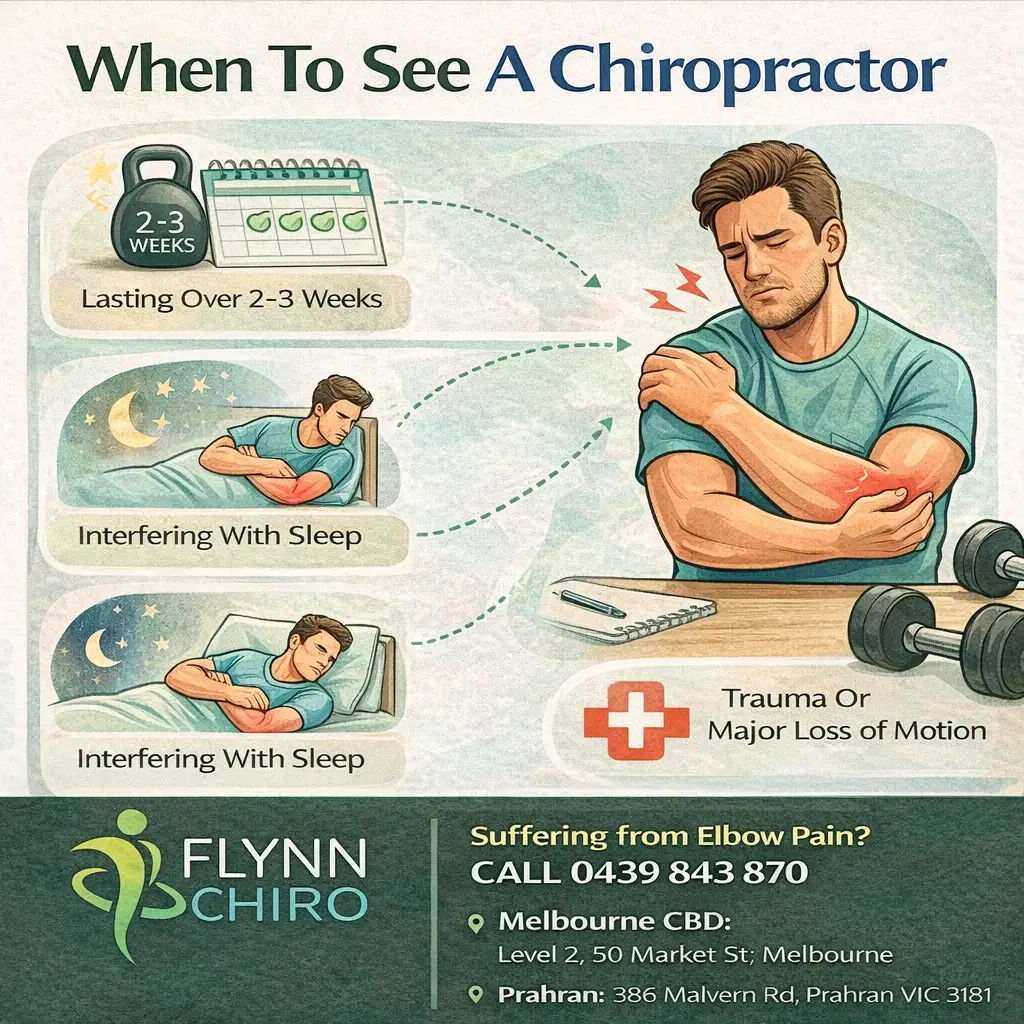
You should consider a professional assessment if elbow pain has lasted more than two to three weeks, keeps returning, affects sleep, or is interfering with everyday tasks like gripping, carrying, or typing.
You should also get checked sooner if you notice obvious weakness, numbness or tingling, sudden trauma, deformity, or a major loss of movement. Elbow pain is commonly tendon-related, but other elbow conditions can also cause pain and need a different approach.
Elbow Pain From Lifting Weights In Melbourne CBD
If you train before work, after work, or during lunch breaks in Melbourne CBD, you are often combining two common stressors at once: long periods of desk posture and high gym demand. That combination can reduce shoulder mobility, increase forearm tension, and make tendon overload more likely.
At Flynn Chiro, the aim is to assess not only the painful elbow but also the movement patterns around it. That may include looking at wrist mechanics, grip strategy, shoulder mobility, thoracic spine movement, and training load so the real driver of the problem is not missed.
Final Thoughts
Elbow pain from lifting weights is common, but it is usually manageable when identified early.
For most gym-goers, the issue comes back to tendon overload, grip demand, wrist position, and training load rather than serious joint damage. Inner elbow pain from lifting weights often behaves like golfer’s elbow. Outer elbow pain from lifting weights often behaves like tennis elbow. Both are aggravated by repeated forearm loading and gripping.
The key is to make smart adjustments early. Modify the lifts that provoke symptoms, rebuild tendon tolerance gradually, and address the mechanics that caused the overload in the first place.
Frequently Asked Questions
How do I relieve elbow pain from lifting weights?
Reduce the aggravating load, adjust your grip or exercise selection, and start a progressive rehab plan instead of relying on rest alone. Activity modification, stretching, braces, and gradual strengthening are common parts of treatment.
Why does my elbow hurt when I grip weights?
Gripping activates the forearm tendons that attach around the elbow. If those tendons are overloaded, gripping can become painful, even during everyday tasks like lifting a cup or turning a handle.
Is lifter’s elbow the same as tennis elbow?
Not exactly. “Lifter’s elbow” is a broad gym term. In practice, it may describe either inner elbow pain that resembles golfer’s elbow or outer elbow pain that resembles tennis elbow.
How long does elbow tendon pain take to settle?
It varies. Tennis elbow can sometimes last many months, and recovery depends heavily on load management and rehabilitation rather than waiting alone.
Can I keep lifting with elbow pain?
Often yes, as long as you modify the exercises, reduce provoking loads, and avoid pushing through sharp worsening pain. Controlled loading is often more helpful than complete rest.