
Training hard is only half of the equation. The other half is recovery.
Most gym-goers in Melbourne know the feeling of waking up sore after a heavy session, feeling tight through the shoulders after bench press, or noticing that the lower back never quite settles after deadlifts. A certain amount of fatigue is normal when you train consistently, but when stiffness, joint restriction, or recurring pain starts interfering with sessions, recovery becomes more than just rest days and protein shakes.
This is where the conversation around chiropractic care becomes relevant. For active people, chiropractic care is not about chasing quick fixes or pretending every ache is a major injury. It is about understanding how your body is moving, identifying what is slowing recovery down, and helping you get back to training with better movement and less interruption.
Why Recovery Matters More Than Most Gym-Goers Realise
In the gym, progress depends on consistency. You do not build strength, mobility, or conditioning from one perfect session. You build it by training well over weeks, months, and years.
That is why recovery matters so much. If your body is constantly carrying unresolved tightness, repeated strain, or limited joint movement, the quality of your training starts to drop. Your squat depth changes. Your pressing feels uneven. Your warm-up takes longer. You start avoiding certain lifts because they never feel quite right.
For many people, the issue is not a major injury. It is the accumulation of smaller problems that never fully settle. When that happens, recovery becomes slower, soreness lasts longer, and training becomes less enjoyable.
The Difference Between Normal Soreness And A Recovery Problem
Not every ache after a workout means something is wrong. Delayed onset muscle soreness is part of training, especially if you have increased load, volume, or intensity. It is usually symmetrical, improves over a few days, and feels more like general muscle tenderness than sharp pain.
A recovery problem tends to feel different. It may show up in the same area every week. It may affect one side more than the other. It may change how you move, how deep you squat, or how confident you feel under the bar.
If discomfort keeps returning after lower body days, push sessions, or pulling work, that is usually a sign that the body is not recovering as cleanly as it should.
Common Gym Issues That Slow Recovery
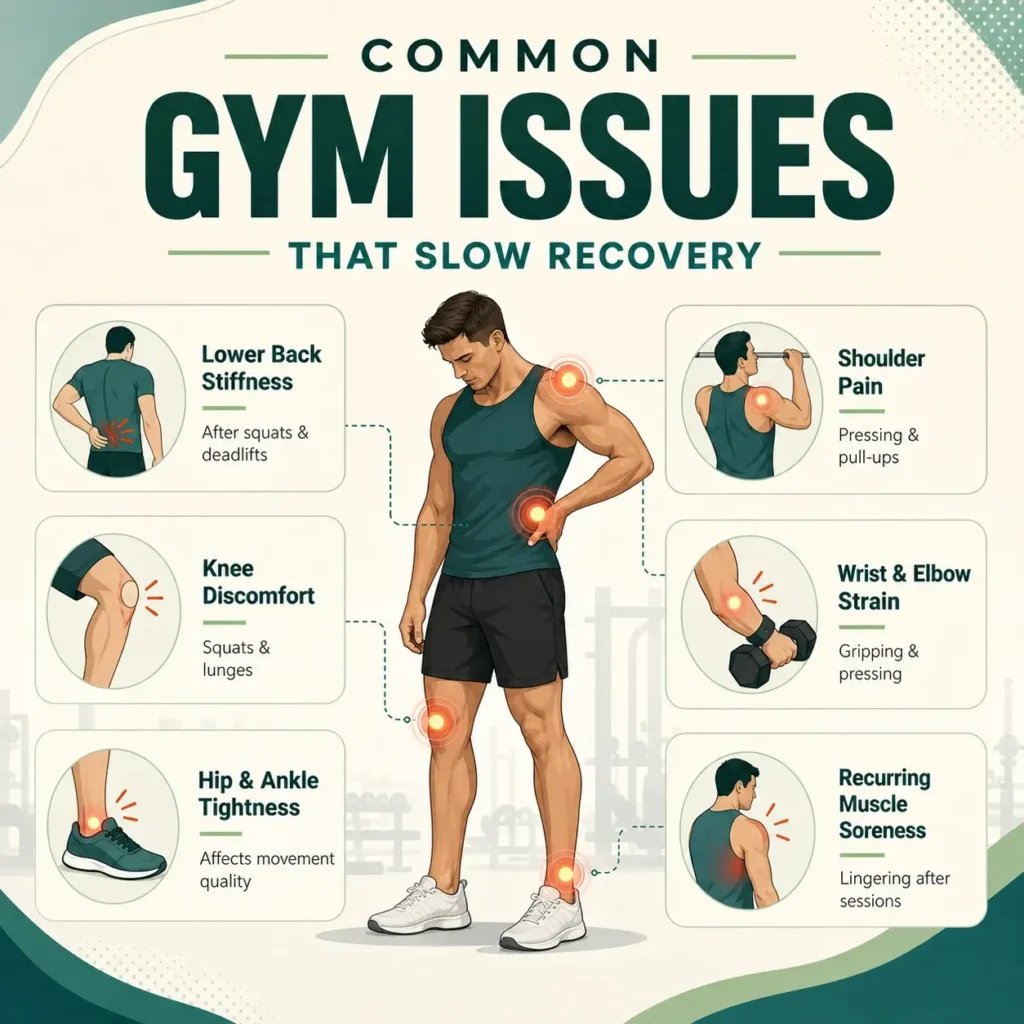
Gym-goers rarely stop training because of one dramatic moment. More often, they are dealing with the same areas over and over again.
Lower back stiffness is one of the biggest examples. It often follows squats, deadlifts, rows, or even long periods of sitting between sessions. Sometimes the issue is not the lift itself, but reduced hip mobility, thoracic stiffness, or fatigue that changes how the body loads.
Shoulder pain is another common problem, especially with bench press, overhead pressing, dips, and pull-ups. If the shoulder blade does not move well or the thoracic spine is stiff, the shoulder joint often ends up doing more work than it should.
Knee discomfort can also slow progress, particularly during squats, lunges, and leg press. In many cases, it is not simply about the knee. Ankle restriction, hip control, and loading patterns all matter.
Wrist and elbow irritation often appear in people doing frequent pressing, gripping, and pulling. These issues can be particularly frustrating because they may not stop you training completely, but they can affect multiple lifts at once.
What A Sports Chiropractor Looks At
For gym-goers, recovery is rarely just about where it hurts. A good assessment looks at the bigger picture.
That includes joint mobility, posture, training load, exercise technique, movement patterns, and previous injury history. It also includes the basic things that often get ignored, such as sleep, work stress, desk posture, and how much sitting happens between training sessions.
A sports chiropractor will usually want to know when the pain appears, which lifts aggravate it, whether it eases during a session, and whether it is affecting performance or confidence. These details matter because they help separate normal training fatigue from a movement issue that needs attention.
How Chiropractic Care May Support Faster Recovery
Chiropractic care can be useful for gym-goers because it focuses on movement as much as symptoms.
One of the most common reasons active people seek care is reduced mobility. When the thoracic spine feels stiff, the shoulders often take extra strain. When the hips are restricted, the lower back may work harder during squats or hinging patterns. Restoring movement in these areas can help the body distribute load more efficiently.
Hands-on care may also help reduce muscular tension and joint restriction that build up with repeated training. For some people, this means the body feels looser and more balanced after heavy sessions. For others, it means they can return to normal movement patterns more quickly instead of compensating around stiffness.
Chiropractic care can also support recovery by making training feel more sustainable. If your body moves better, warm-ups can become easier, technique can feel more natural, and the line between soreness and strain becomes clearer.
That does not mean chiropractic care replaces good programming, smart load management, sleep, or nutrition. It works best as part of a broader recovery approach, not as a substitute for one.
Why Melbourne Gym-Goers Often Need More Than Stretching
A lot of active people try to fix everything with foam rolling and stretching. Sometimes that helps, but often the relief is short-lived.
That is because many recovery issues are not simply caused by “tight muscles”. They are linked to joint stiffness, movement habits, poor load tolerance, or one area compensating for another. If you only stretch the sore area without addressing the reason it keeps overworking, the same problem often returns.
This is especially relevant in Melbourne, where many gym-goers balance hard training with desk-based work, long commutes, and busy schedules. It is common to move from eight hours of sitting straight into squats, deadlifts, or upper-body sessions. When the body has been still all day, recovery and movement quality both take a hit.
Signs Your Gym Soreness Is More Than Just Normal Fatigue
There are a few clues that suggest it may be time to look more closely at what is going on.
- Pain keeps returning in the same area after the same lifts
- One side feels tighter, weaker, or less stable than the other
- Warm-ups take longer and longer to feel normal
- You are changing technique to avoid discomfort
- Stiffness is affecting your work, sleep, or daily movement
- Numbness, tingling, or sharp pain is present
These signs do not always mean something serious is wrong, but they do suggest that simple rest may not be enough.
Common Mistakes Gym-Goers Make With Recovery
One of the biggest mistakes is training through pain too early. Many people convince themselves that if they can still move the weight, the issue is minor. Unfortunately, repeated irritation often turns a manageable problem into a recurring one.
Another mistake is relying only on passive relief. Massage guns, stretching, and heat can feel good, but if they are not paired with better movement, improved control, or sensible load progression, the result is often temporary.
Many gym-goers also ignore how much daily life affects recovery. Poor sleep, long hours at a desk, inconsistent warm-ups, and high stress levels all influence how well the body tolerates training.
What To Expect At Flynn Chiro
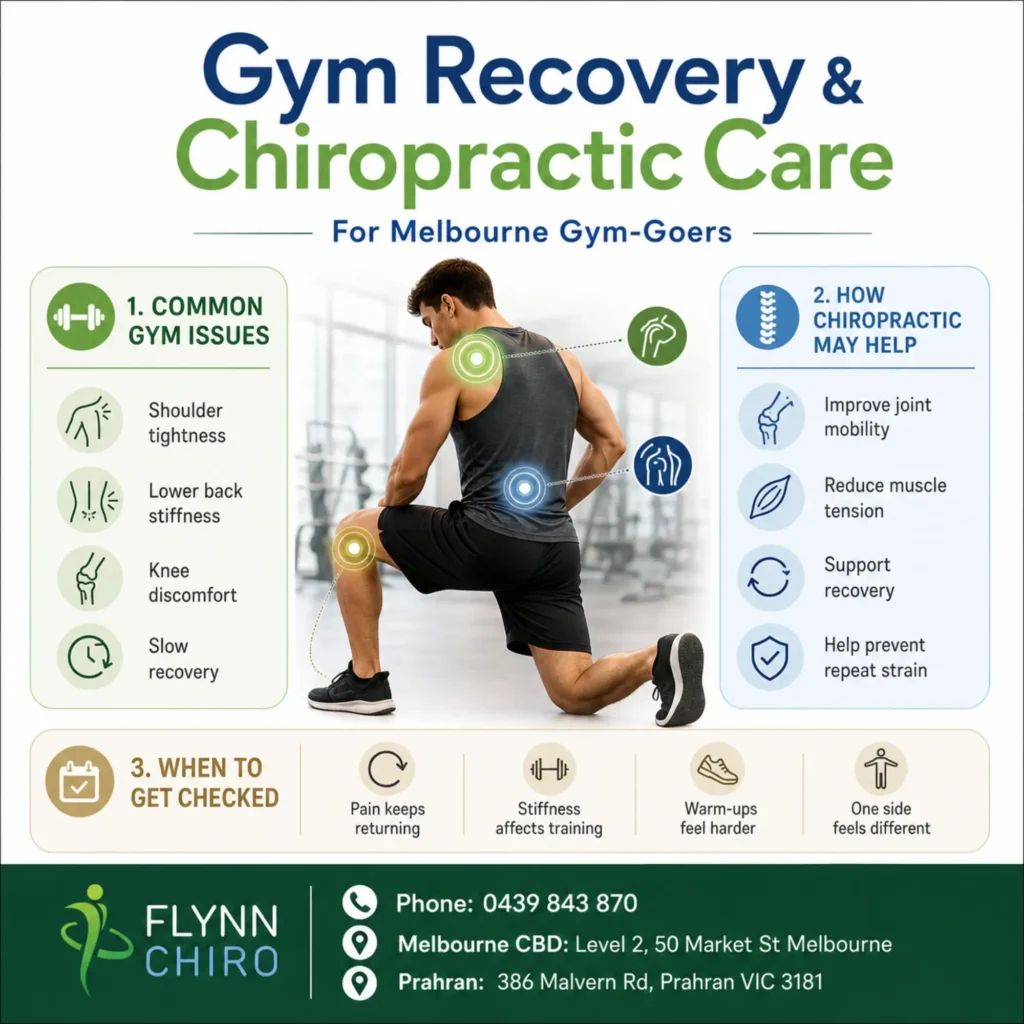
At Flynn Chiro, care is centred around understanding why your body is not recovering as well as it should. Dr Flynn Pettersson works with active people dealing with gym-related stiffness, joint restriction, and recurring musculoskeletal strain, with a focus on helping them move better and train more comfortably.
Treatment may include joint mobilisation, hands-on techniques, soft tissue work, and practical advice around movement, training habits, and recovery. The aim is not simply to provide short-term relief, but to help you understand what is contributing to the problem and what you can do about it.
If you are looking for support from an experienced Melbourne chiropractor for gym recovery, Flynn Chiro offers personalised care designed to help active people manage recurring strain, restore movement, and stay more consistent with training.
When To Consider Professional Help
If a problem is not settling with rest, lighter training, or basic mobility work, it is usually worth getting assessed.
That is especially true if the same issue keeps returning, if your movement quality is changing, or if pain is affecting your ability to train consistently. For many gym-goers, early assessment can stop a smaller issue from becoming a longer-term interruption.
The goal is not to stop training completely unless that is necessary. Often, the better approach is to understand what needs modifying, what needs treating, and what needs rebuilding.
Final Thoughts
Gym-goers in Melbourne do not need perfect bodies to train well, but they do need bodies that recover properly.
When stiffness, soreness, or joint restriction keeps lingering beyond what feels normal, chiropractic care may help by improving movement, reducing unnecessary strain, and supporting more consistent training. For active people, that can mean fewer interrupted sessions, better lift quality, and more confidence under load.
Recovery is not just about getting out of pain. It is about keeping your body in a position where you can continue training hard without the same problems slowing you down every week.
Frequently Asked Questions
Is It Good To See A Chiropractor If You Work Out A Lot?
It can be helpful if training regularly leaves you with recurring stiffness, limited mobility, or pain that affects performance. Chiropractic care may support movement and recovery when paired with sensible training and rehab.
Can Chiropractic Help With Squat, Deadlift, Or Bench Press Pain?
It may help identify movement restrictions, joint stiffness, and loading patterns that are contributing to discomfort during those lifts.
Should I See A Chiropractor Before Or After A Workout?
That depends on the issue. Some people prefer care on non-training days, while others find it helpful around heavier blocks when recovery is more demanding.
Is Chiropractic Only For Elite Athletes?
Not at all. Many everyday gym-goers benefit from care when work, posture, training load, and recovery habits start creating repeated strain.
What Is The Difference Between Normal Soreness And Injury?
Normal soreness is usually general, temporary, and improves within a few days. Injury-related pain is more likely to be sharp, persistent, one-sided, or linked to particular movements or lifts.