Inner elbow pain can be frustrating, especially when simple tasks like lifting a coffee cup, carrying a bag, or shaking hands start to hurt. Golfer’s elbow is a common overuse problem that affects the tendons on the inside of the elbow. Despite the name, most people with golfer’s elbow do not play golf. It is often seen in gym-goers, tradespeople, office workers, and anyone doing repeated gripping, lifting, or wrist-flexing movements.
If it is not managed properly, golfer’s elbow can linger for months. The good news is that early treatment, activity modification, and progressive rehab often make a real difference.
What Is Golfer’s Elbow?
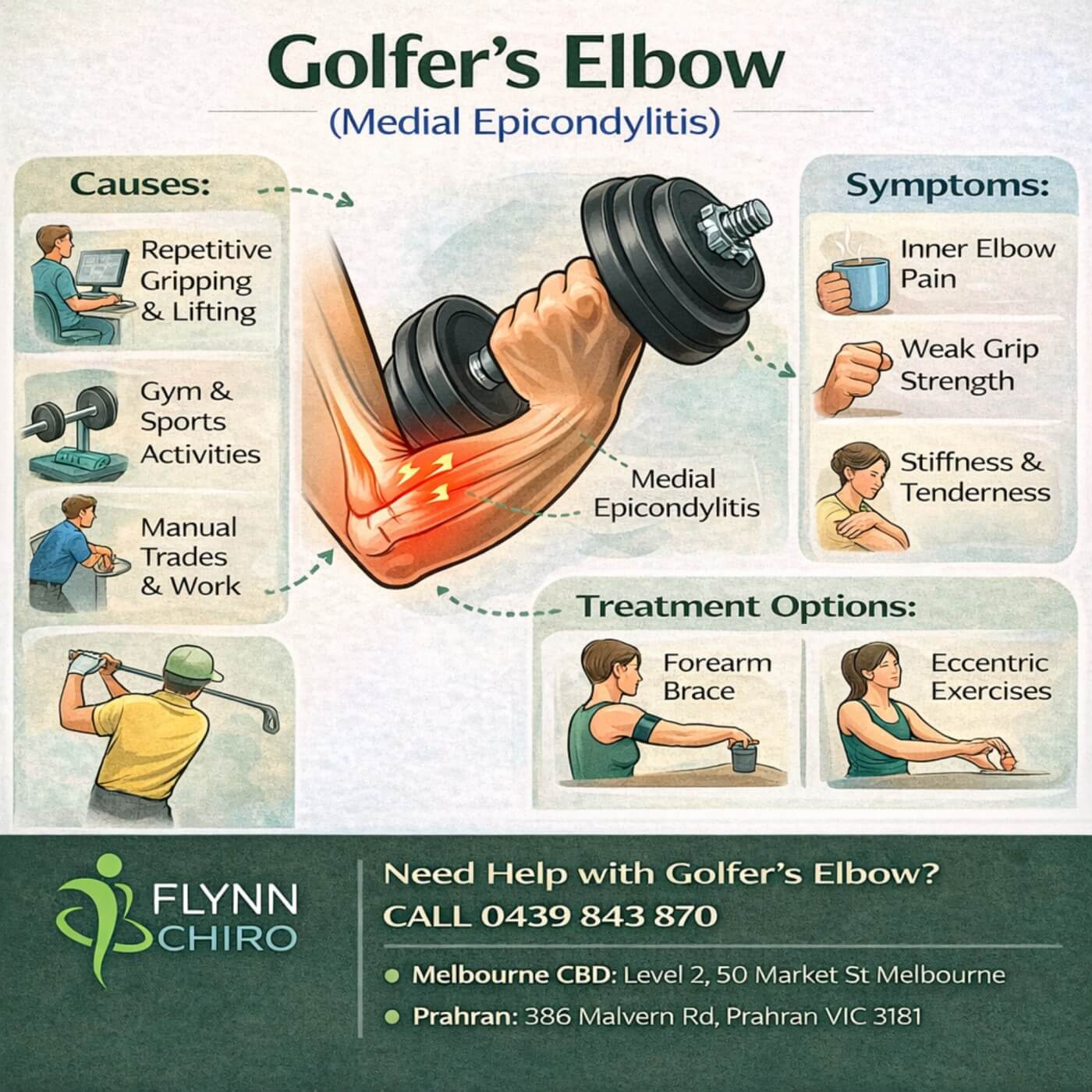
Golfer’s elbow is also known as medial epicondylitis. It affects the wrist flexor tendons where they attach to the bony point on the inside of the elbow. Repeated strain can overload this tendon attachment and lead to pain, tenderness, and reduced grip strength.
Although people often describe it as inflammation, many cases are better understood as a tendon overload problem caused by repeated stress and not enough recovery time.
Where Is Golfer’s Elbow Pain Felt?
The pain is usually felt on the inside of the elbow. Some people notice a dull ache, while others feel sharper pain when gripping, twisting, or lifting. The discomfort may also travel into the forearm or wrist.
Common golfer’s elbow symptoms include:
- Inner elbow pain
- Weak grip strength
- Pain when making a fist
- Stiffness, especially in the morning
- Tenderness over the bony point on the inner elbow
In some cases, nearby nerve irritation can cause tingling or numbness into the ring and little fingers, which can make the problem feel more complicated than a simple tendon strain.
What Causes Golfer’s Elbow?
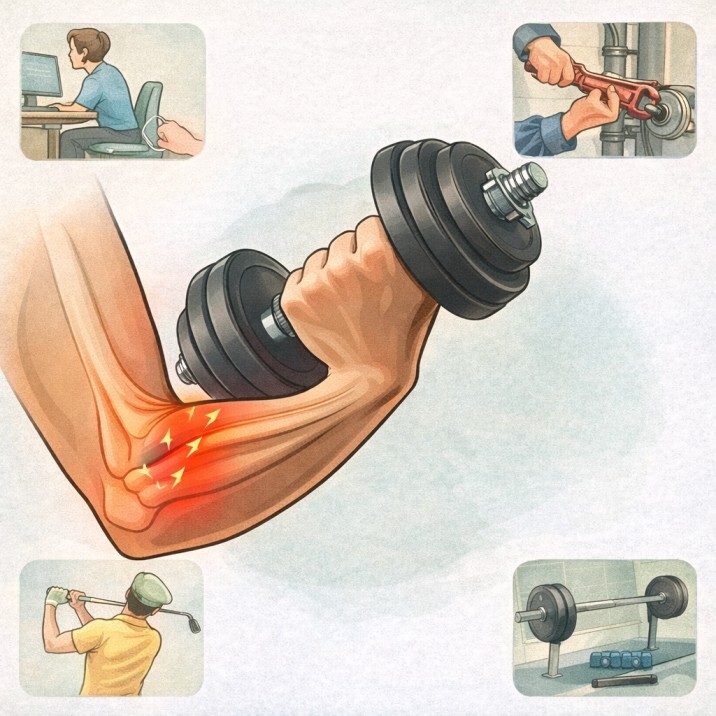
Repetitive Gripping And Lifting
The most common cause of golfer’s elbow is repeated stress through the wrist and forearm. Motions such as bending the wrist, gripping tools, carrying loads, or repeatedly twisting the forearm can all overload the tendon over time.
Sport And Gym Training
Golf can trigger it, but it is far from the only cause. Throwing sports, racquet sports, and strength training can all irritate the inner elbow, especially if technique is poor or training load rises too quickly.
Work Demands
Golfer’s elbow is often linked to repetitive work tasks. People in manual jobs such as plumbing, carpentry, painting, and mechanics may develop it from repeated gripping and wrist flexion. It can also appear in desk workers and heavy mouse users.
Sudden Load Increases
Sometimes the issue begins after a sudden change in activity, such as heavier lifting at the gym, more DIY work than usual, or a busy weekend of gardening. Tendons generally do better with gradual load than sudden spikes.
Golfer’s Elbow Vs Tennis Elbow
These two conditions are similar, but the pain location is different. Golfer’s elbow affects the inside of the elbow, while tennis elbow affects the outside. Both are overuse injuries involving forearm tendons, but they stress different tendon groups.
How Long Does Golfer’s Elbow Take To Heal?
Recovery time depends on how irritated the tendon is and how early treatment begins. Mild cases may settle within several weeks, while more persistent cases can take a few months or longer. Tendons generally heal more slowly than muscles, which is one reason elbow tendon pain can be stubborn.
One common mistake is relying on rest alone. Reducing aggravating activity can help in the short term, but long-term improvement usually depends on progressive strengthening and improving load tolerance.
Golfer’s Elbow Treatment Options
Relative Rest
You do not usually need complete immobilisation, but it helps to temporarily reduce movements that aggravate the pain. That might mean modifying lifting, gym exercises, golf practice, or repetitive work tasks for a period of time.
Ice Or Short-Term Pain Relief
Ice can sometimes help after aggravating activity. Some people also use short-term over-the-counter pain relief, although this does not address the underlying tendon capacity.
Stretching And Mobility Work
Gentle wrist flexor stretches and mobility work may help reduce stiffness and improve comfort. If nerve-type symptoms are present, nerve-focused rehab may also be appropriate after assessment.
Progressive Strengthening
This is one of the most important parts of golfer’s elbow treatment. Tendons respond well to gradual loading. Isometric exercises can sometimes help settle pain early on, while progressive strengthening helps improve tendon capacity over time.
Bracing
A counterforce brace worn around the forearm may reduce strain during aggravating tasks and can offer short-term relief for some people. However, it is best seen as a support tool rather than a full solution.
When Inner Elbow Pain Might Be Something Else
Not all inner elbow pain is golfer’s elbow. Other possibilities include ulnar nerve irritation, ligament injury, referred pain from the neck, or elbow joint irritation. If the pain followed trauma, causes marked swelling, or includes ongoing numbness or weakness, it is worth getting checked properly.
When To Seek Professional Help
It is sensible to seek an assessment if:
- Pain lasts longer than six to eight weeks
- Grip strength keeps declining
- Tingling or numbness does not settle
- Symptoms interfere with work, sport, or sleep
- The pain keeps returning
Early assessment can help clarify whether the issue is tendon overload, nerve irritation, or something else affecting the inner elbow.
How Flynn Chiro Can Help
At Flynn Chiro, care for golfer’s elbow focuses on more than just the sore spot itself. Inner elbow pain is often influenced by repeated loading patterns through the wrist, forearm, shoulder, and upper limb. A proper assessment can help identify what is overloading the tendon and what needs to change. This may include hands-on treatment, movement advice, progressive rehab, and practical guidance around sport, work, or gym training.
The aim is to help reduce irritation, restore strength, and improve how the arm handles load over time.
How To Help Prevent Golfer’s Elbow From Coming Back
Once symptoms improve, prevention becomes important. The main goal is to avoid overloading the tendon again before it is ready.
Helpful strategies include:
- Increase gym loads gradually
- Improve lifting or sporting technique
- Warm up before repeated gripping activities
- Build forearm, shoulder, and upper back strength
- Modify repetitive work tasks where possible
Tendons usually do better with steady progression than sudden spikes in activity.
Final Thoughts
Golfer’s elbow is a common cause of inner elbow pain, and it often affects far more than golfers. Repetitive gripping, lifting, and wrist-flexing tasks are common triggers, especially when recovery is limited.
The most effective long-term approach usually combines activity modification, gradual strengthening, and identifying the mechanical reasons the tendon became overloaded in the first place. With the right plan, many people can get back to work, training, and daily life with far less pain.
Frequently Asked Questions
What is the difference between golfer’s elbow and medial epicondylitis?
There is no difference. Medial epicondylitis is the medical term for golfer’s elbow.
What is the fastest way to treat golfer’s elbow?
The most reliable approach is usually a combination of relative rest, reducing aggravating activities, and gradually rebuilding tendon strength.
Why does my inner elbow hurt when lifting weights?
Lifting can overload the forearm flexor tendons, especially during gripping, curls, rows, or wrist-flexion-heavy exercises. Poor technique and sudden load increases can make this more likely.
Can golfer’s elbow heal on its own?
Some mild cases may settle with reduced aggravation, but symptoms often return if tendon strength and load tolerance are not rebuilt.
Do braces help golfer’s elbow?
A forearm strap can sometimes reduce strain during activity and provide temporary symptom relief, but it does not replace proper rehab.