Rib pain can be surprisingly unsettling. It may start as a dull ache under the shoulder blade or a sharp catch when you twist, cough, or take a deep breath. Because the rib cage moves every time you breathe, even mild irritation can feel intense and worrying. Many people immediately wonder: Is this a pulled muscle? A cracked rib? A nerve problem?
Two of the most common causes of pain around the ribs and mid-back are intercostal muscle strain and thoracic or rib joint irritation. While they can feel similar at first, they behave very differently. Understanding those differences can help you decide whether simple self-care is appropriate or whether you need a professional assessment.
Quick Comparison: Muscle Strain vs Joint Irritation
Although symptoms overlap, several key features help distinguish a muscle problem from a joint issue.
Muscle strain usually causes a broader, more generalised ache across a wider area of the rib cage or upper back. The sensation is often dull, heavy, or tight. It tends to feel better when you find a comfortable, neutral position and worse when you stretch or actively use the affected muscle.
Rib or thoracic joint irritation, on the other hand, is typically highly localised. People can often point to one exact spot near the spine or along a rib. The pain is sharper, sometimes described as stabbing or catching. It is commonly triggered by sudden movements, deep inhalation, coughing, or sneezing.
The way your pain responds to breathing and movement is often the biggest clue.
What Is a Muscle Strain Between the Ribs?
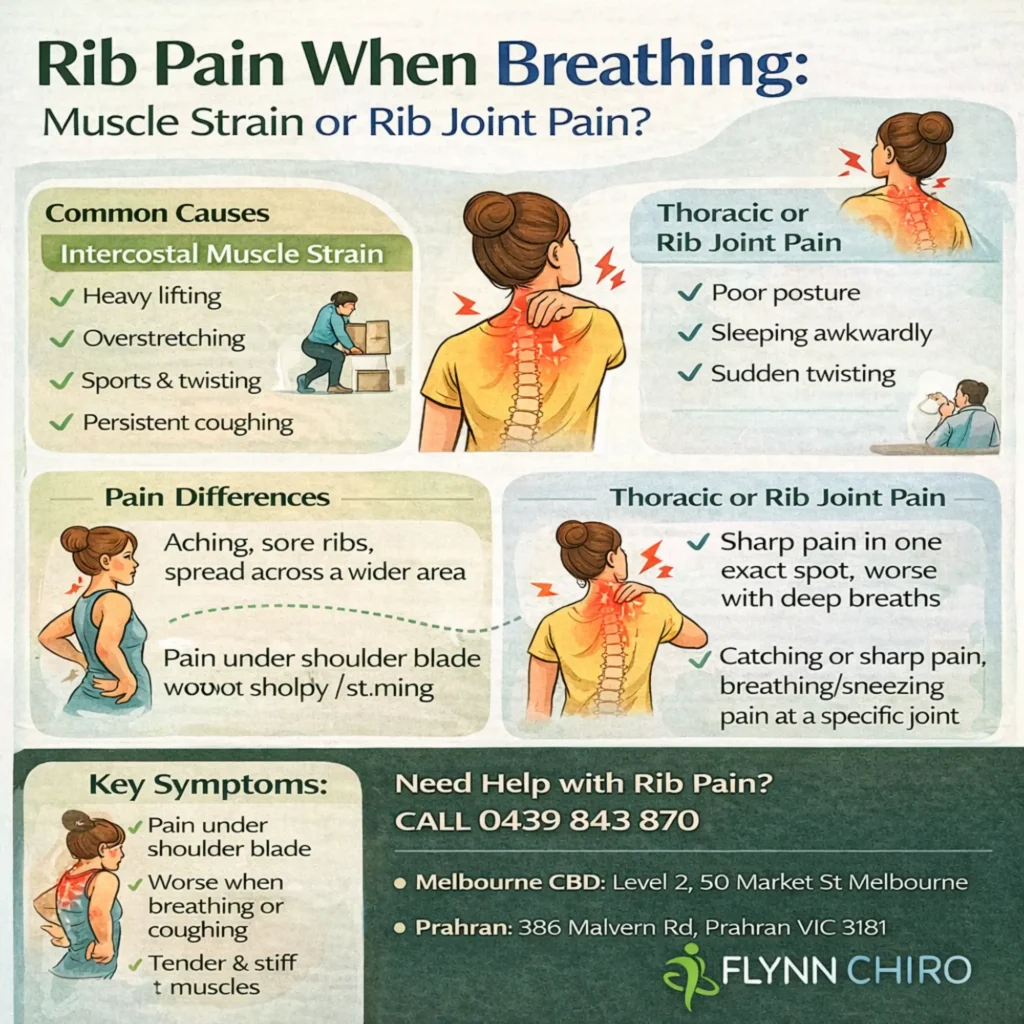
A muscle strain around the ribs usually involves the intercostal muscles, which run between each rib and help control breathing and trunk movement. These muscles contract and relax every time you inhale and exhale, and they also assist with twisting and bending.
When these muscles are overstretched or torn, even slightly, inflammation develops in the tissue. This can happen suddenly or gradually, depending on the cause.
What It Feels Like
Intercostal muscle strain usually presents as a spreading ache rather than a sharp, pinpoint pain. The area may feel tender and tight, and pressing into the muscle often reveals a sore or knotted section. Stretching the torso in one direction or actively rotating can reproduce the discomfort.
The pain often improves once you find a neutral posture and avoid aggravating movements. Gentle heat may ease the tightness, and slow, controlled breathing is usually uncomfortable but not sharply painful.
Common Causes of Rib Muscle Strain
Muscle strain typically follows a clear mechanical stress. This might include heavy lifting, especially with twisting, overexertion at the gym, or repetitive sports such as golf, tennis, or swimming. Sudden coughing fits can also strain the intercostal muscles.
In some cases, poor conditioning or fatigue plays a role. If muscles are already tired or weak, they are more vulnerable to overstretching during a sudden movement.
What Is Thoracic or Rib Joint Irritation?
The ribs connect to the spine at small joints called costovertebral joints. These joints, along with the facet joints of the thoracic spine, allow subtle gliding and rotation during breathing and trunk movement.
When one of these joints becomes irritated or restricted, it can produce sharp, highly localised pain. Unlike muscle strain, this problem is less about tissue tearing and more about joint mechanics and inflammation.
What It Feels Like
Joint irritation is often described as a sharp “lock” or a sensation like a golf ball stuck under the shoulder blade. Many people can point to a single, very specific spot about one or two centimetres from the spine.
The pain may come on suddenly during a twist, when getting out of bed, or even after a prolonged period of slouching. It can also develop gradually with sustained poor posture.
One of the hallmark signs is a sharp pain with deep inhalation, coughing, laughing, or sneezing. These actions rapidly expand the rib cage, which stresses the irritated joint and triggers discomfort.
The Breathing Clue
Breathing provides one of the clearest ways to differentiate muscle strain from joint irritation. With muscle strain, a deep breath may feel tight or uncomfortable because the muscles stretch, but the sensation is usually dull.
With joint irritation, inhaling deeply can create an immediate, stabbing pain in a very specific spot. Sneezing or coughing may cause a sudden spike in pain that feels disproportionate to the movement.
This is because the rib joints must glide smoothly as the rib cage expands. If one joint is restricted or inflamed, that quick expansion can provoke a sharp response.
Common Causes of Rib Joint Irritation
Poor posture is a major contributor. Prolonged slouching rounds the upper back and places stress on the rib joints. Sleeping awkwardly, especially on one side with the torso rotated, can also irritate a joint.
Sudden twisting movements or minor “locking” events, such as reaching across your body quickly, may trigger symptoms. In many cases, people cannot recall a dramatic injury; the pain simply appears after a combination of posture and movement stress.
How to Tell If Rib Pain Is Muscular or Bone-Related
A common fear is whether rib pain could be a fracture. Rib fractures usually follow clear trauma, such as a fall, car accident, or direct blow to the chest. The pain is typically severe, constant, and worsens with even minimal pressure directly on the bone.
Muscle strain feels broader and softer in nature, and joint irritation is sharply localised but not necessarily associated with bruising or significant swelling. If you can trace the pain to a specific injury involving force, and it is extremely painful to press directly on the rib itself, medical assessment is important.
In the absence of trauma, most rib pain is mechanical rather than a fracture.
Muscle Strain vs Nerve Pain Along the Rib Cage
Another common question is whether the pain could be nerve-related. Nerve irritation along the rib cage often produces a very different quality of pain.
Nerve pain tends to feel burning, tingling, or electric. It may follow a band-like pattern around the chest or upper abdomen. In some cases, it radiates from the spine around to the front of the body.
Muscle strain, by contrast, is usually aching or tight. Joint irritation is sharp and localised but does not typically produce tingling or electrical sensations. If numbness, weakness, or widespread burning pain develops, further assessment is recommended.
How These Conditions Respond to Movement
Movement behaviour offers valuable clues. Muscle strain often feels stiff at first but may improve slightly as you warm up gently. Stretching can reproduce the pain but may also provide temporary relief afterward.
Joint irritation tends to produce sudden catching sensations. A particular movement, such as rotating in one direction or taking a deep breath, may repeatedly trigger the same sharp pain. Unlike muscle strain, warming up does not always reduce the sharpness if the joint remains restricted.
Understanding these patterns can guide early management decisions.
When Should You Be Concerned?
Most rib and thoracic pain is mechanical and not dangerous. However, certain symptoms warrant prompt medical attention. Difficulty breathing, severe chest pressure, or pain accompanied by dizziness should always be evaluated urgently. Significant trauma, fever, unexplained weight loss, or neurological symptoms such as weakness or numbness also require assessment.
If pain is severe, worsening, or not improving after a reasonable period of rest and gentle movement, seeking professional advice is wise.
Can Poor Posture Cause Rib and Thoracic Joint Pain?
Yes, posture plays a major role. Prolonged sitting with rounded shoulders and a forward head position places sustained stress on the thoracic spine and rib joints. Over time, this can reduce joint mobility and irritate surrounding tissues.
Desk work, long commutes, and frequent device use all encourage slouching. This position shortens certain muscles and overstretches others, creating imbalance. The rib joints must still move with every breath, and when they are held in a compromised position for hours, irritation can develop.
Improving posture and incorporating regular movement breaks can reduce the likelihood of recurrent joint issues.
Treatment Options for Rib and Thoracic Pain
Management depends on the underlying cause. Muscle strains generally respond well to relative rest, gentle mobility work, and gradual return to activity. Applying heat may reduce tightness, while controlled stretching and strengthening help restore function.
Rib joint irritation often benefits from restoring joint mobility. Gentle thoracic rotation exercises and breathing drills can help, but sometimes manual therapy is needed to reduce restriction. Addressing posture and ergonomics is essential to prevent recurrence.
Both conditions benefit from gradual strengthening of the upper back and core muscles. Improving postural endurance reduces stress on both muscles and joints.
How Chiropractic Assessment Helps Identify the Source
A thorough physical examination is often the clearest way to distinguish muscle strain from joint irritation. This includes palpating the rib cage and thoracic spine, assessing how the joints move during breathing, and testing specific movements to see what reproduces symptoms.
At Flynn Chiro, assessments focus on identifying whether the pain originates from muscular tension, joint restriction, or a combination of both. By evaluating posture, breathing mechanics, and spinal mobility, a targeted plan can be developed.
Dr. Flynn Pettersson provides hands-on care aimed at restoring normal rib and thoracic joint movement, reducing muscle tension, and improving postural control. Treatment may include gentle joint mobilisation, soft tissue work, and specific exercises designed to prevent recurrence rather than just temporarily masking pain.
Targeted Treatment for Rib and Thoracic Spine Pain
If you’re experiencing persistent rib pain or sharp thoracic discomfort that isn’t settling with rest, a professional assessment can help pinpoint whether the issue is muscular or joint-related. At Flynn Chiro, we provide personalised chiropractic care focused on restoring rib joint mobility, reducing muscle tension, and improving thoracic spine function. Under the care of Dr. Flynn Pettersson, treatment plans are tailored to your specific presentation and may also incorporate support for related concerns such as posture correction, neck pain, back pain, and sports injury rehabilitation to ensure the entire spine works efficiently and comfortably together.
Frequently Asked Questions
How to tell if rib pain is muscular or bone?
Muscular rib pain feels broader and more diffuse, often worsening with active use or stretching of the muscle. Bone-related pain is usually sharply localised and often follows trauma. Severe tenderness directly over the bone and persistent intense pain may suggest fracture.
How to tell the difference between a pulled muscle and a cracked rib?
A pulled muscle generally improves with rest and gentle movement over time. A cracked rib often causes intense pain with even small movements or pressure and usually occurs after a direct impact or significant injury.
What does a muscle strain around the ribs feel like?
It commonly feels like a dull, tight ache across a wider area of the rib cage. The discomfort increases when you stretch or contract the muscle and may feel tender to touch.
How do you tell the difference between muscle strain and nerve pain along the ribs?
Muscle strain produces aching or tightness. Nerve pain often feels burning, tingling, or electric and may travel in a band-like pattern around the chest.
Why does my rib pain hurt when I sneeze?
Sneezing rapidly expands the rib cage. If a rib joint is irritated, this sudden movement can trigger a sharp, localised pain due to stress on the inflamed joint.