Tennis elbow is one of the most common reasons people develop pain on the outside of the elbow. Despite the name, most people with tennis elbow have never played tennis. It often shows up after repeated gripping, lifting, typing, tool use, gym training, or other everyday tasks that overload the forearm tendons over time.
The medical term for tennis elbow is lateral epicondylitis, although persistent cases are more accurately described as a tendon problem rather than a simple inflammatory flare-up. That distinction matters, because the most effective treatment usually involves the right kind of loading and rehabilitation, not just rest alone.
What Is Tennis Elbow?
Tennis elbow affects the tendons that attach to the bony point on the outside of the elbow, known as the lateral epicondyle. The tendon most commonly involved is linked to the forearm muscles that help extend the wrist and stabilise the hand during gripping. When these tissues are repeatedly overloaded, they can become painful and less tolerant to everyday tasks.
In practical terms, that means things like lifting a kettle, turning a doorknob, carrying shopping bags, using a mouse, or shaking hands can become surprisingly uncomfortable. Pain and weakness often travel from the outer elbow into the forearm and wrist.
What Causes Tennis Elbow?
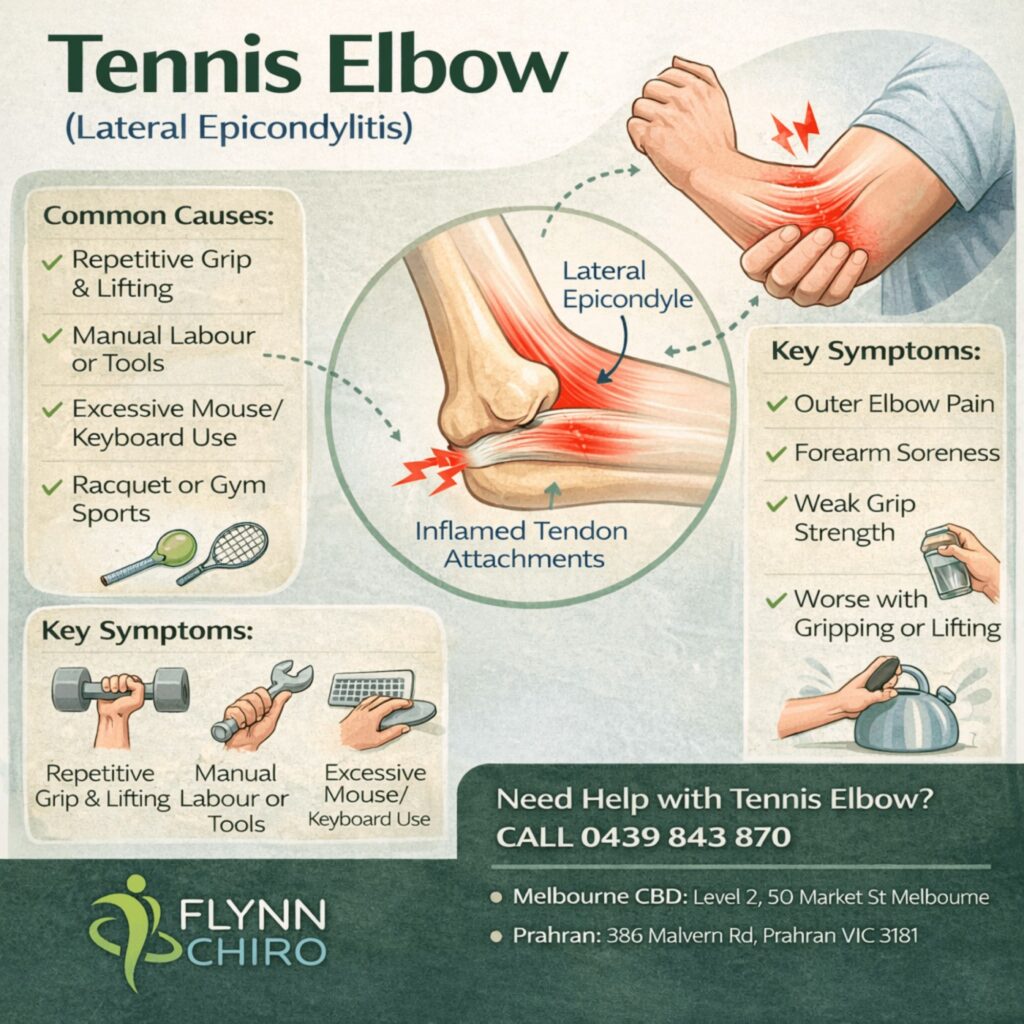
The main cause of tennis elbow is repetitive strain. Repeated wrist extension, gripping, lifting, or twisting can overload the tendon attachment faster than it can recover. This is why tennis elbow is common in tradespeople, office workers, gym-goers, parents lifting children, and anyone doing repetitive hand or forearm work.
Racquet sports can trigger it too, especially with poor technique or unsuitable equipment, but sport is not the main driver for most people. In other words, it is usually not about one dramatic injury. It is about a repeated mismatch between load and capacity.
Tennis Elbow Symptoms
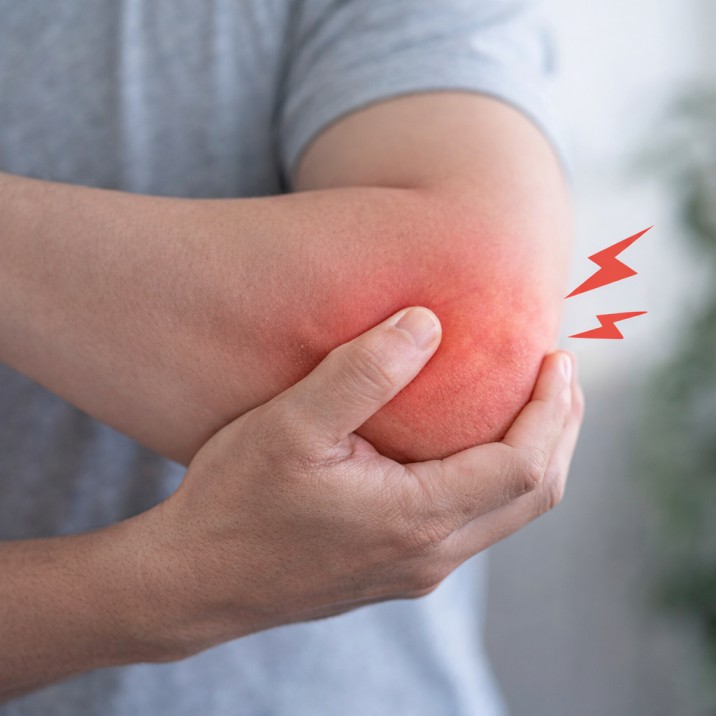
The most common symptom is pain on the outside of the elbow. Some people describe it as sharp during activity, while others notice a burning ache that spreads down the forearm. It often feels worse with gripping, lifting, twisting, opening jars, turning keys, or carrying objects with the palm facing down.
A weaker grip is another classic sign. You may notice that holding a coffee cup, shaking hands, or lifting a bag feels less secure than usual. In many cases, symptoms develop gradually rather than all at once.
Tennis Elbow Vs Lateral Epicondylitis
These two terms are commonly used to describe the same condition. Tennis elbow is the everyday term most patients recognise, while lateral epicondylitis is the traditional medical label. Some modern clinical sources also use terms like lateral elbow tendinopathy, because longer-lasting cases usually reflect tendon degeneration and disorganisation rather than ongoing inflammation alone.
For website SEO and patient readability, “tennis elbow” is the better lead term, while “lateral epicondylitis” works well as a supporting keyword in headings and body copy.
The Stages Of Tennis Elbow
Tennis elbow usually does not go from zero to severe overnight. It tends to progress in stages.
Early Stage
In the early stage, the tendon is irritated and pain is usually felt during or just after aggravating activity. At this point, reducing overload and starting the right rehabilitation can make a big difference.
Developing Stage
As symptoms progress, pain may last longer after activity and daily tasks may start to feel more difficult. Grip strength often begins to drop, and the elbow can become easier to irritate.
Persistent Stage
In more persistent cases, the tendon becomes less tolerant to load and symptoms can remain for months. Recovery is still very possible, but it usually requires a gradual strengthening plan and better load management rather than complete rest.
Is Tennis Elbow Inflammation Or Tendon Damage?
This is where many people get stuck. The term “epicondylitis” suggests inflammation, but long-lasting tennis elbow is often more of a tendinopathy problem. That means the tendon structure has become irritated, weakened, and less organised over time.
That is also why anti-inflammatory treatment alone rarely solves the full problem. It may help with symptoms in some cases, especially early on, but it does not rebuild tendon strength or restore capacity by itself.
Best Treatment For Tennis Elbow
The best treatment for tennis elbow usually starts with load modification. That means reducing or adjusting the movements that keep irritating the tendon, without completely avoiding all use of the arm. Resting from the exact aggravating activity for a period can help, but total rest for too long is usually not the answer.
A structured exercise plan is a key part of recovery. Official orthopaedic guidance supports stretching and strengthening exercises to improve tendon healing, endurance, and resistance to repetitive stress. Isometric and progressive strengthening approaches are commonly used in rehabilitation plans.
Braces or counterforce straps can sometimes reduce strain during aggravating tasks, and ergonomic changes can be particularly useful for desk workers or anyone doing repeated wrist extension at work. Ice, short-term pain relief, and activity modification may also help settle symptoms while the tendon is being reloaded more sensibly.
How Long Does Tennis Elbow Take To Heal?
This is one of the biggest frustrations with tennis elbow. Recovery is often slower than people expect. Official sources note that symptoms commonly last several months, and in many cases recovery takes around 6 to 12 months, especially if the problem has been present for a while. Some people improve sooner, while stubborn cases can last longer than a year.
The good news is that most cases improve without surgery. AAOS notes that approximately 80% to 95% of patients do well with non-surgical treatment.
What Makes Tennis Elbow Worse?
The most common reason tennis elbow lingers is continuing to overload the tendon without changing anything. Repeated gripping, heavy lifting, tool use, racquet sports, mouse use, or gym exercises that keep provoking the tendon can all slow recovery.
Another common issue is relying only on a brace or rest without a strengthening plan. That may calm the pain temporarily, but it does not improve the tendon’s ability to cope with load when normal activity returns.
When To Get Tennis Elbow Checked
If your outer elbow pain has lasted more than six weeks, your grip strength keeps dropping, or daily tasks are becoming difficult, it is worth having it assessed. It is also sensible to get checked if pain is severe, movement is restricted, or the diagnosis is unclear. Other conditions, including radial tunnel irritation or elbow joint problems, can sometimes mimic tennis elbow.
At Flynn Chiro, elbow pain is assessed in the context of the whole upper limb, including the wrist, shoulder, posture, and loading habits. Where appropriate, care can focus on improving movement, reducing aggravation, and building tendon capacity gradually over time.
Final Thoughts
Tennis elbow is common, frustrating, and often slower to settle than people expect. The term may sound sporty, but for most people it comes from repeated everyday overload rather than tennis itself.
The key is not just to rest and hope it goes away. The best long-term results usually come from a combination of load modification, progressive strengthening, and identifying the habits or mechanics that keep flaring it up.
Frequently Asked Questions
Is tennis elbow the same as lateral epicondylitis?
Yes. Tennis elbow is the common name, and lateral epicondylitis is the traditional medical term. Some clinicians now also use “lateral elbow tendinopathy.”
What is the best treatment for tennis elbow?
The most effective approach usually combines load modification with a structured strengthening programme. Bracing, ergonomic changes, and pain-relief strategies can support recovery, but exercise-based rehabilitation is a key part of improving tendon capacity.
How long does tennis elbow take to heal?
Many cases take several months, and recovery is often in the 6 to 12 month range. Some people improve earlier, while persistent cases can last longer.
Should I stop exercise completely?
Usually not. It is often better to modify aggravating activity rather than stop all movement. A graded strengthening plan is commonly recommended because tendons generally respond well to the right amount of load.
Does a brace fix tennis elbow?
A brace may reduce strain and make some activities more manageable, but it does not address the underlying tendon capacity on its own. It works best as part of a broader rehabilitation plan.