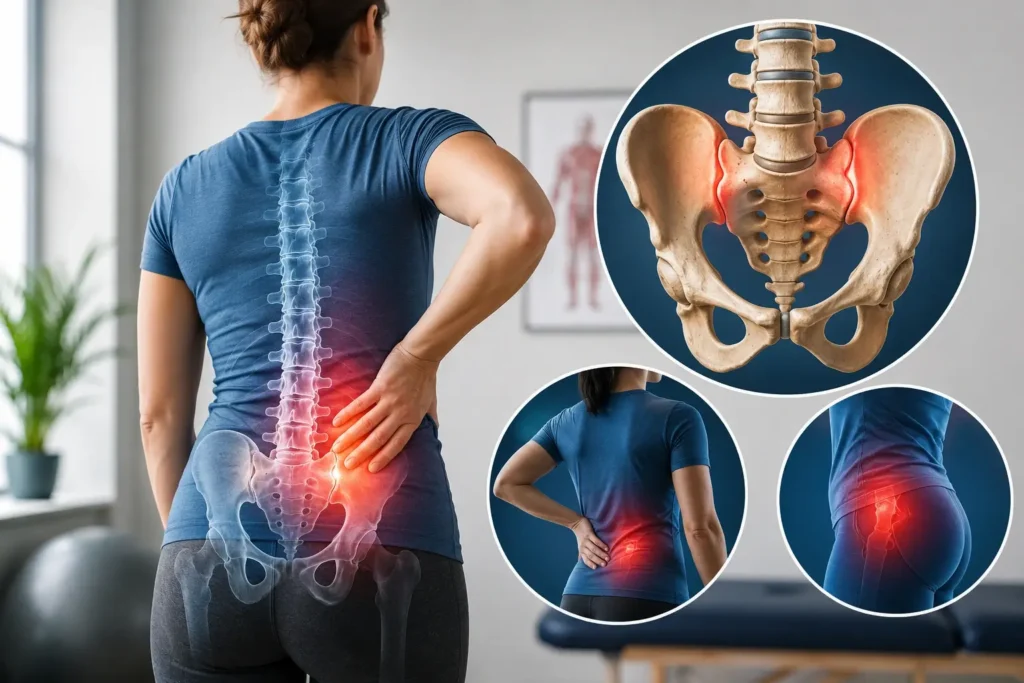
SI joint pain is one of the most commonly overlooked causes of lower back pain. Many people assume they are dealing with a disc problem, sciatica, or a general back strain, when the real source of discomfort is the sacroiliac joint.
If you are dealing with one-sided lower back pain and cannot work out why it keeps coming back, understanding the symptom pattern of SI joint pain can be very helpful. The way it behaves, where it travels, and which movements aggravate it often follow a recognisable pattern.
Knowing what to look for is an important first step towards getting the right assessment and support.
What Is The SI Joint?
The sacroiliac joints sit where the spine meets the pelvis. You have one on each side, connecting the sacrum at the base of the spine to the pelvic bones. These joints help transfer force between the upper body and the legs every time you walk, climb stairs, sit, stand, or change direction.
Unlike the lumbar spine, the SI joints are designed more for stability than large movement. Even so, when they become irritated, too stiff, or a little too mobile, pain can develop. This often happens because of repeated strain, prolonged sitting, pregnancy-related changes, awkward movement patterns, trauma, or altered loading through the hips and pelvis.
Because the SI joint sits close to the lower back and buttock region, its pain is often mistaken for sciatica or disc-related pain.
The Typical Pattern Of SI Joint Pain
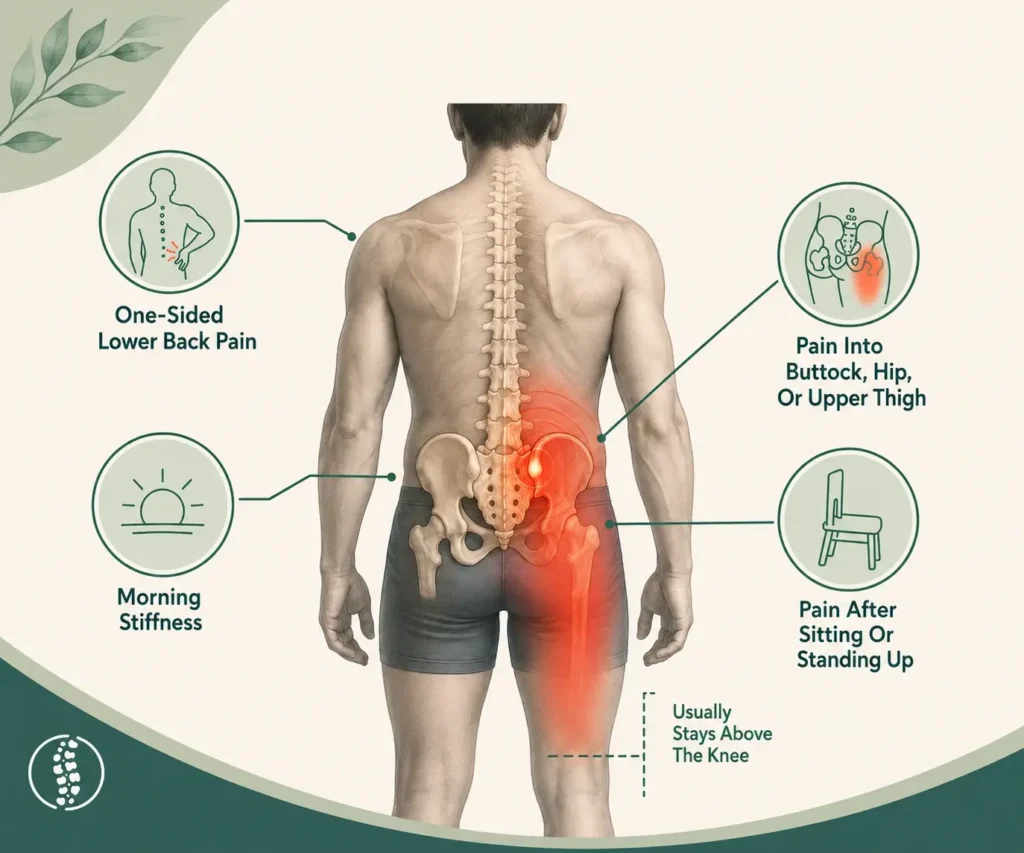
One of the most useful things about SI joint pain is that it often presents in a fairly predictable way. It tends to be mechanical, meaning certain positions and movements regularly trigger it.
One-Sided Lower Back Pain
SI joint pain is most commonly felt on one side of the lower back. It usually sits just below the beltline, near the small dimple area at the back of the pelvis. Many people can point to the exact spot with one finger rather than describing a broad area of discomfort.
Although both joints can be involved, one-sided pain is much more common.
Pain Into The Buttock, Hip, Or Upper Thigh
Another common sign is pain that travels into the buttock, outer hip, groin, or upper thigh. It may feel like a deep ache, a sharp catch, or a tight pulling sensation.
A useful clue is that SI joint pain usually stays above the knee. It may spread, but it does not usually run all the way into the calf or foot in the same way that nerve-related pain can.
Morning Stiffness And Pain After Sitting
Many people notice that SI joint pain is worse first thing in the morning or after sitting for too long. Rolling over in bed, getting out of the car, or standing up from a chair can trigger a sharp catch in the lower back or buttock.
Once you start moving, symptoms may ease a little. Then, after another long period of sitting or standing still, they often return.
A Feeling Of Instability
Some people describe the leg on the affected side as feeling unreliable, heavy, or slightly unstable. It can feel as though the joint is not moving properly or the leg might give way, especially when walking or changing direction.
This is not always true weakness. More often, it is the body reacting to irritation around the joint by tightening the surrounding muscles.
Movements That Commonly Aggravate SI Joint Pain
Because the SI joints help manage load through the pelvis, symptoms often increase with activities that shift weight unevenly or place extra demand on one side.
Common aggravating movements include getting up from sitting, rolling over in bed, climbing stairs, standing on one leg, walking on uneven ground, and sitting for long periods.
If your pain tends to flare with these movements but does not worsen with coughing, sneezing, or repeated bending forward, that may point more towards SI joint pain than a disc issue.
The Fortin Finger Test
A simple clue sometimes used in assessment is the Fortin Finger Test. If you can consistently point to a very small area just below the back dimple of the pelvis and say, “It hurts right here,” that often suggests the SI joint may be involved.
The importance of this is precision. Disc pain tends to feel broader and less specific. SI joint pain is often more localised and repeatable in the same place.
SI Joint Pain Vs Sciatica
SI joint pain is often confused with sciatica because both can cause discomfort into the buttock or leg. The difference is in the pattern.
SI joint pain is more likely to be one-sided, localised near the beltline, and referred into the buttock or upper thigh. It is usually movement-related and tends to stay above the knee.
Sciatica is more likely to travel further down the leg and may be accompanied by numbness, pins and needles, burning pain, or weakness. It is often linked to irritation of a nerve in the lumbar spine.
An L5-S1 disc issue can sometimes mimic SI joint pain, which is why a proper assessment is important if symptoms keep returning or are not improving.
Why SI Joint Pain Develops
SI joint pain does not always come from one major injury. Often, it develops gradually through repeated stress and uneven loading.
Pregnancy can increase ligament laxity around the pelvis and make the joint more sensitive. A fall onto the buttocks, a twist while lifting, or a car accident can also irritate the area. Hip, knee, or foot problems may change the way you walk and place more stress through one side of the pelvis.
For many people in Prahran, everyday habits also play a role. Long hours sitting at a desk, commuting, standing with weight shifted onto one leg, crossing the same leg repeatedly, or carrying a heavy bag on one shoulder can all contribute over time.
It is often the build-up of these smaller stresses that keeps symptoms flaring up.
When It May Not Be The SI Joint
Although SI joint pain is common, not all pain in this area comes from the SI joint.
If you have pain running below the knee with numbness, tingling, or weakness, the lumbar spine may be more involved. Pain affecting both legs, progressive weakness, or changes in bladder or bowel control require urgent medical attention.
Pain that is severe, constant, unexplained, or accompanied by fever, night sweats, or unexplained weight loss should also be assessed promptly.
How SI Joint Pain Is Diagnosed
SI joint pain is usually diagnosed through a detailed clinical assessment. This includes looking at where the pain is felt, what movements trigger it, how you stand and walk, and whether certain tests reproduce your familiar symptoms.
Scans are not always the answer. Imaging can sometimes show age-related changes that are not actually the source of pain. That is why movement assessment, symptom pattern, and physical testing are all so important.
A thorough assessment helps determine whether the pain is more likely to be coming from the SI joint, lumbar spine, hip, or surrounding muscles.
How Chiropractic Care May Help
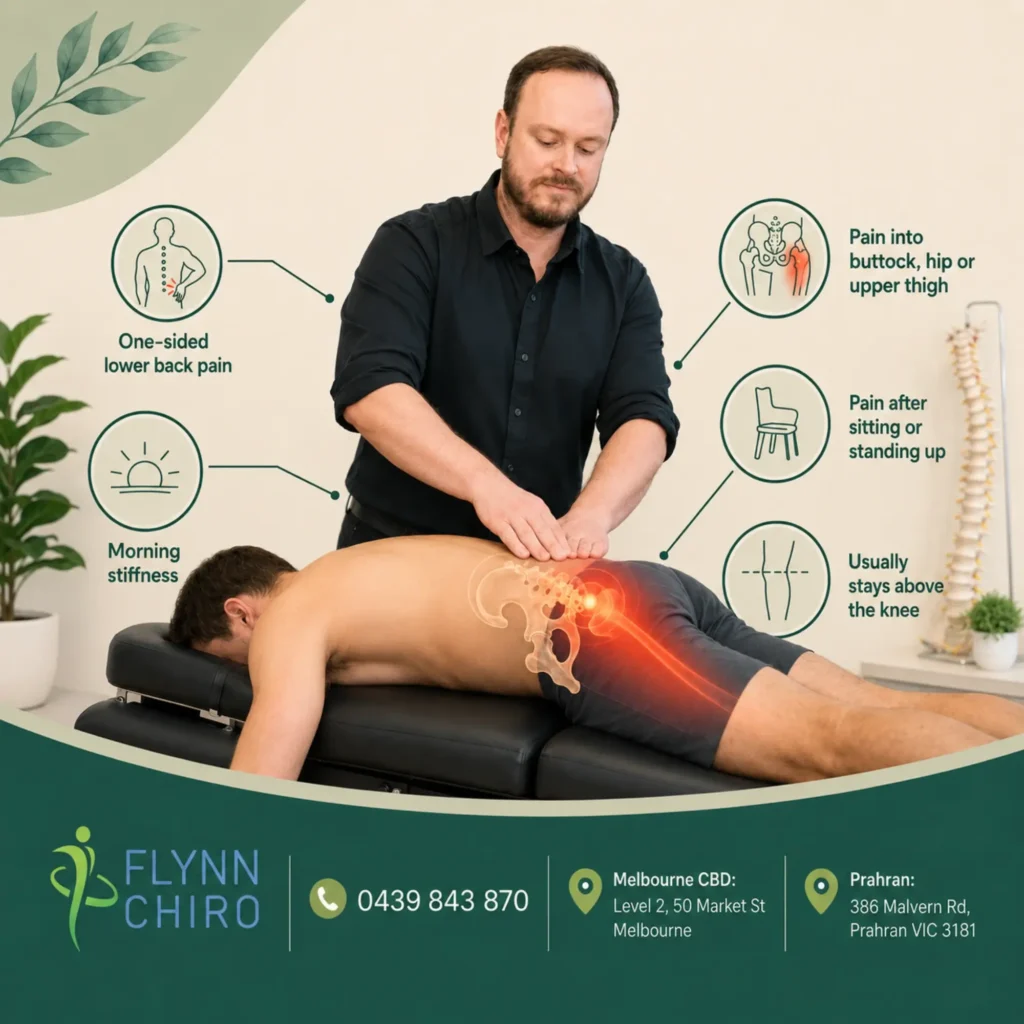
Support for SI joint pain depends on what is driving the problem. Some people are dealing with stiffness and restricted movement. Others are dealing with irritation, instability, or poor load transfer through the pelvis and hips.
Care may include hands-on treatment to improve movement, soft tissue techniques to reduce surrounding muscle tension, and advice on sitting posture, walking habits, exercise modification, and day-to-day movement patterns.
Exercises are often a key part of longer-term improvement. Strengthening the glutes, improving hip mobility, and building better pelvic control can help reduce repeated stress on the SI joint.
At Flynn Chiro, the focus is on working out what is contributing to your symptoms and helping you move more comfortably with a plan that suits your body and your lifestyle.
If you are looking for local support, you can learn more about seeing a chiropractor in Prahran.
Why SI Joint Pain Matters For Prahran Patients
For many people in Prahran, SI joint pain is influenced by a mix of daily habits. Long periods of sitting, commuting, gym training, running, and busy routines can all place repeated stress through the lower back and pelvis.
Often, it is not one dramatic moment that causes the issue. It is the repeated loading of one side over time. That is why symptoms can become frustratingly persistent if the underlying movement and lifestyle factors are not addressed.
Recognising those patterns early can make it easier to settle flare-ups and reduce the chance of the same pain returning again and again.
Final Thoughts
SI joint pain usually follows a recognisable pattern. It often causes one-sided lower back pain, referral into the buttock or upper thigh, stiffness after sitting, and discomfort with movements such as stairs, standing on one leg, or getting up from a chair.
Because it can feel similar to sciatica or a disc issue, it is often misunderstood. The good news is that the symptom pattern is usually quite clear once you know what to look for.
If your pain sounds like SI joint pain and it keeps interfering with your day-to-day life, getting the right assessment can help you understand the source and move towards more lasting improvement.
Frequently Asked Questions
What Does SI Joint Pain Feel Like?
It often feels like one-sided lower back pain just below the beltline, with discomfort into the buttock, hip, groin, or upper thigh. It may feel stiff, sharp, achy, or unstable depending on the movement.
How Do I Know If My Pain Is Coming From The SI Joint?
If you can point to a small painful spot near the back dimple of the pelvis and the pain worsens with stairs, rolling in bed, standing on one leg, or getting up from sitting, the SI joint may be involved.
Can SI Joint Pain Be Mistaken For Sciatica?
Yes. SI joint pain can mimic sciatica because it may travel into the buttock and thigh. The difference is that SI joint pain usually stays above the knee and is less likely to cause pins and needles or weakness.
Is SI Joint Pain Worse In The Morning?
It can be. Many people notice more stiffness first thing in the morning or after long periods of sitting still.
When Should I Get SI Joint Pain Checked?
If it keeps returning, is affecting sleep, walking, exercise, or everyday movement, or if you are unsure whether it is SI joint pain or something else, it is worth getting assessed.